A GARDEN SHARED
My grandmother was a Master Gardener and flower farmer in the South. Some of my earliest and fondest memories are of accompanying her on the tractor to pick flowers in the back 40. This stretch of land consisted of several small fields of cultivated liatris, gladiolus, sunflowers, celosia, and other flowers, depending on the season and year.
The flowers and my Nanna were indeed special. At that time and age, though, my focus was on the small crawling creatures that made their homes among the purple-tufted spikes of liatris and buzzed from one colorful zinnia bloom to the next. Spiders of all sorts were my favorites, especially green lynx spiders. About an inch in diameter and neon green, I would often find them actively feeding on a small grasshopper or caterpillar, oblivious to my presence. I watched as they went about their work, a vignette of the larger cycle that’s carried on in fields, forests, backyards, and every corner of the planet with living things. Now, that includes my garden in Maine.
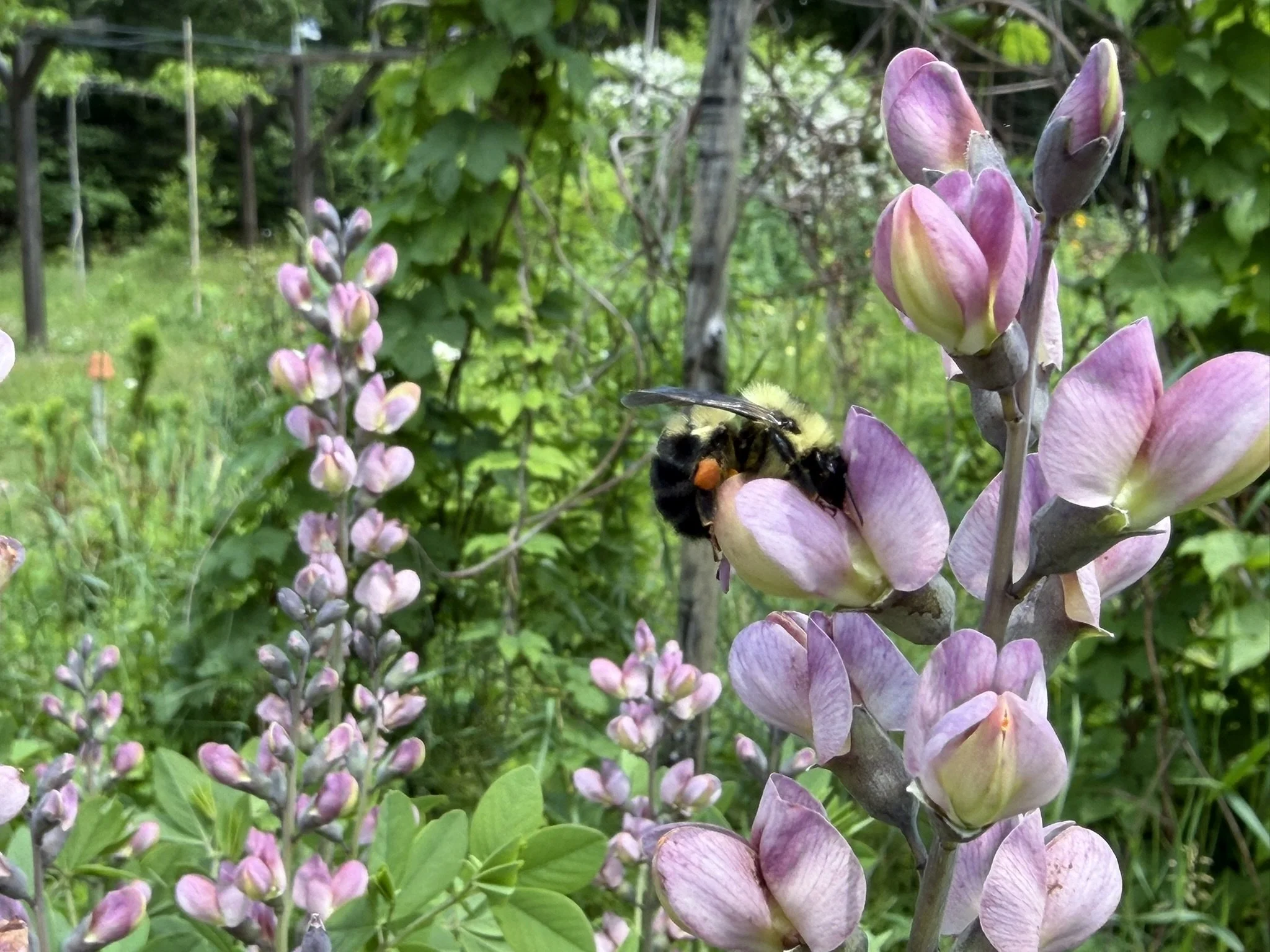
Two-spotted bumble bee on baptisia
After work and before we start dinner, I take a stroll through the garden, rain or shine, even in the soupy heat of summer. I watch as the pea pods swell and the garlic scapes curl. I gently move the meandering pumpkin vines away from paths and lift the leaves to check for squash bugs. I note the vibrating enthusiasm of bumblebees wriggling between the petals of baptisia, searching for their treasure of nectar and pollen.
I understand that not every insect and crawling thing in the garden inspires affection. I have my fair share of garden destroyers and creatures that I would prefer to move along to another garden (or planet). Today I noticed that several buds on one of my roses had been drilled through by hungry rose curculios. Keeping snails away from my delphinium is a constant battle. One variety of Asiatic lily is particularly favored by scarlet lily beetles. And in a few weeks, the Japanese beetles will emerge and turn lush apple and cherry leaves into lacy skeletons of their former glossy green glory.
Despite the destructive garden residents, I am grateful for the diversity of life in the garden and the allies that have made a home here. Earthworms, slugs, snails, and other detritivores break down decaying material, helping to convert it into rich compost. Parasitic wasps and flies help control insect populations, including Japanese beetles and tomato hornworms. Paper wasps and baldfaced hornets hunt and collect caterpillars and grasshoppers to feed their larval young. And, of course, bees, adult parasitic flies and wasps, moths, butterflies, and many species of beetles provide vital pollination services to native and introduced plants in my garden and yours.
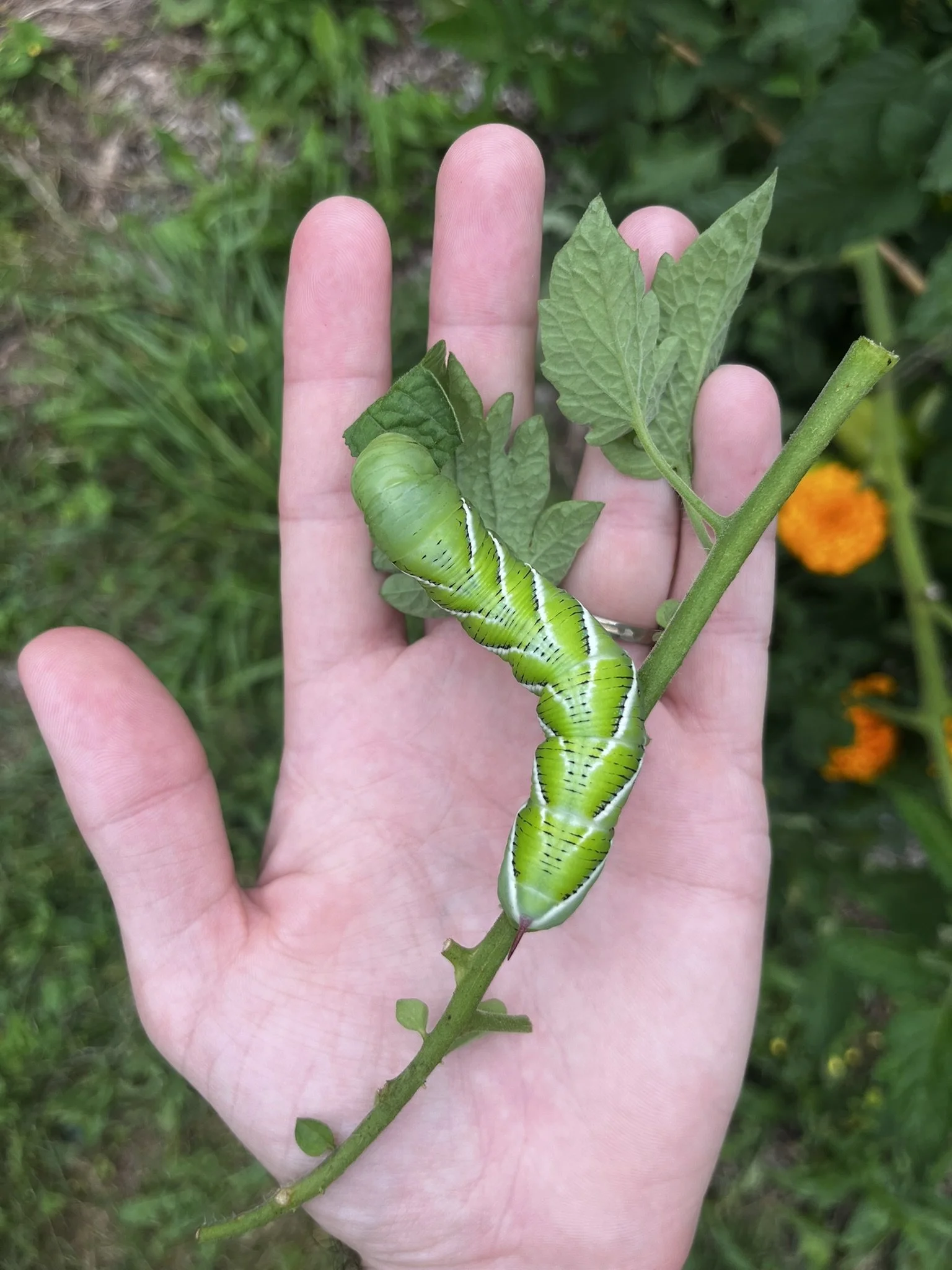
Enormous tobacco hornworm
There is some degree of acceptance of the tide of nature that makes for a much more enjoyable gardening experience, at least in my opinion. That means tolerating a little damage to my plants for the benefit of diversity, within reason. The larvae, or caterpillars, of black swallowtail butterflies feed on fennel, parsley, dill, carrot, and related plants. I generally find only one or two on a single plant. I have never seen the larvae defoliate an entire crop or cause significant damage. I enjoy seeing graceful black swallowtail butterflies fluttering through my garden. In fact, I think of them when planting dill and parsley, popping in a couple more plants with butterfly larvae in mind. If you have a few caterpillars or other pests in your garden munching on leaves, it doesn’t necessarily mean drastic action is needed. It may mean that your garden is part of a balanced life cycle.
Ensuring the health of my garden does mean some degree of pest management. I regularly inspect the plants, closely observing growth and looking for potential indicators of disease and insect damage. Before squishing or spraying, I try to identify the fungus, insect, or other cause for concern. I plant enough to share, as I mentioned earlier with the black swallowtail larvae. I also encourage diversity by interplanting flowers that bring predatory insects into the garden, such as yarrow, goldenrod, and lovage.
A garden does not need to look untouched by wildlife to be healthy. It can be alive with relationships, where the gardener learns when to observe, when to intervene, and when to share. A few webs, a couple holes, and a nibbled leaf or two may mean the garden is useful to a larger ecosystem. I find that a shared garden, one with worms below, spiders between the stems, a couple caterpillars on the herbs, and butterflies returning, is generous, resilient, and vibrant.